

- Cove
- SentinelOne
- BitDefender
- Webroot
- Cove
- SentinelOne
- BitDefender
- Webroot
1
Create the client custom field.
- Navigate to Settings > CRM > Custom Fields.
- Add custom field with the following details:
- Name: Cove Customer UID
- Variable: CoveCustomerUID
2
Populate the Cove Customer UID for each client.
- Navigate to a specific client.
- Click Custom Fields.
- Edit Cove Customer UID.
- Enter the Customer UID retrieved from Cove.
3
Write the script.
- Navigate to Scripts.
- Create a script with the following details:
- Name: Install-Cove
- Content:
# ===== Configuration Variables =====
$CUSTOMERUID = $gorelo:client.CoveCustomerUID
$PROFILEID = "All-in" # Default retention policy
$PRODUCT = "0" # Profile ID (use "0" for no profile or a specific profile ID)
$DOWNLOADPATH = "C:\Windows\Temp"
# ===================================

$startTime = Get-Date
$INSTALL = "$DOWNLOADPATH\bm#$CUSTOMERUID#$PROFILEID#.exe"

# Download installer
try {
    [Net.ServicePointManager]::SecurityProtocol = [Net.SecurityProtocolType]::Tls12
    (New-Object System.Net.WebClient).DownloadFile("https://cdn.cloudbackup.management/maxdownloads/mxb-windows-x86_x64.exe", "$INSTALL")
} catch {
    Write-Output "ERROR: Failed to download installer - $_"
    exit 1
}

# Run installer
try {
    Start-Process -FilePath $INSTALL -ArgumentList "-product-name `"$PRODUCT`"" -Wait -NoNewWindow
    Start-Sleep -Seconds 5
} catch {
    Write-Output "ERROR: Installation failed - $_"
    exit 1
}

# Verify installation
$service = Get-Service -Name "Backup Service Controller" -ErrorAction SilentlyContinue
$process = Get-Process -Name "BackupFP" -ErrorAction SilentlyContinue

if ($service.Status -eq 'Running' -and $process) {
    Write-Output "SUCCESS: Backup Service Controller is running and BackupFP process is active."
    Write-Output "Installed for Customer UID: $CUSTOMERUID"
    $exitCode = 0
} else {
    Write-Output "WARNING: Backup Service Controller or BackupFP process is not running as expected."
    Write-Output "Customer UID: $CUSTOMERUID"

    # Check log for errors
    $logDirectory = "C:\ProgramData\mxb\Backup Manager\logs\ClientTool"
    if (Test-Path $logDirectory) {
        $latestLog = Get-ChildItem -Path $logDirectory -Filter "*.log" | Sort-Object LastWriteTime -Descending | Select-Object -First 1
        if ($latestLog) {
            $errorLines = Get-Content -Path $latestLog.FullName | Where-Object { $_ -match '\[E\]' } | Select-Object -Last 3
            if ($errorLines) {
                Write-Output "Recent errors from log:"
                $errorLines | ForEach-Object { Write-Output $_ }
            }
        }
    }
    $exitCode = 1
}

$endTime = Get-Date
Write-Output "Installation completed in $([math]::Round(($endTime - $startTime).TotalSeconds, 2)) seconds."
exit $exitCode
1
Create the client custom field.
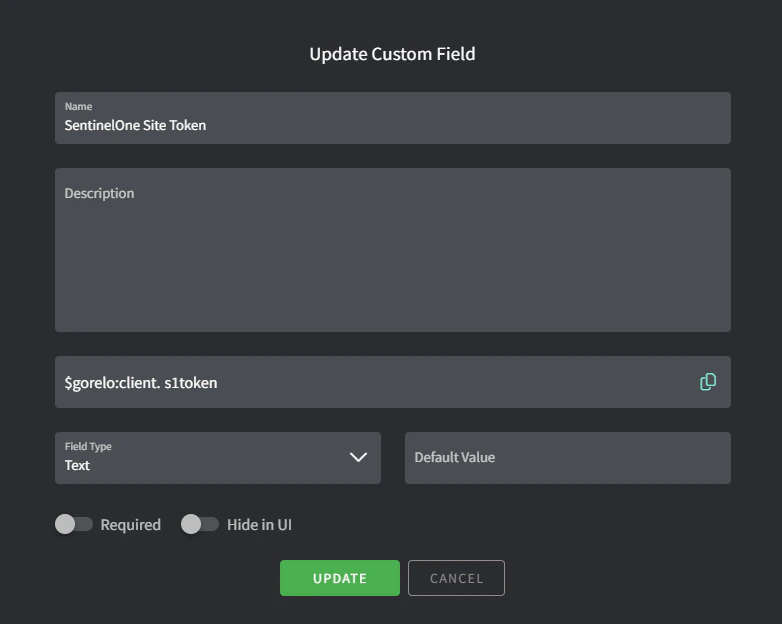
- Navigate to Settings > CRM > Custom Fields:
- Add a custom field with the following details:
- Name: SentinelOne Site Token
- Variable: s1token
2
Populate the software token for each client.
- Navigate to a specific client
- Click Custom Fields.
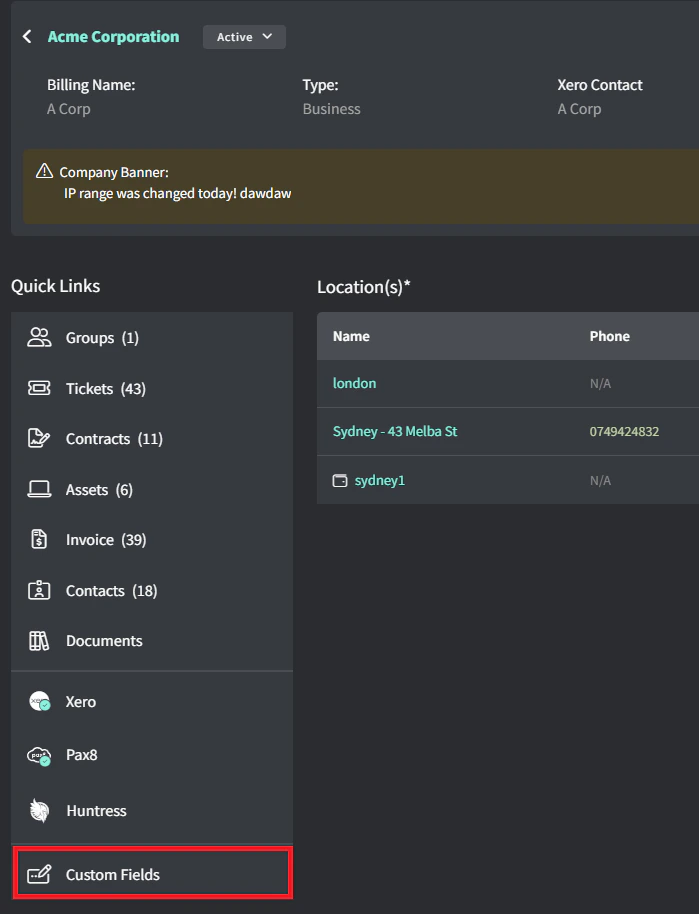
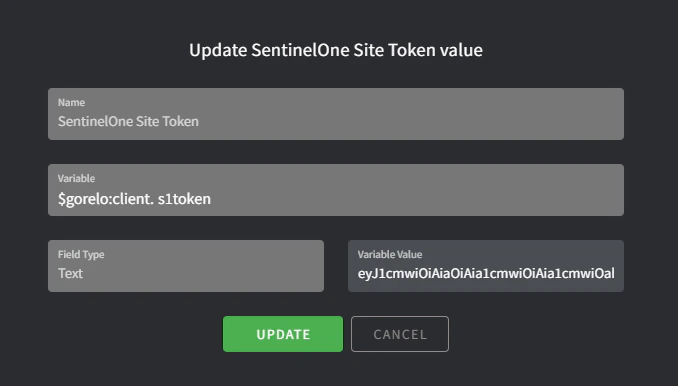
- Edit SentinelOne Site Token.
- Enter the Site Token retrieved from SentinelOne.
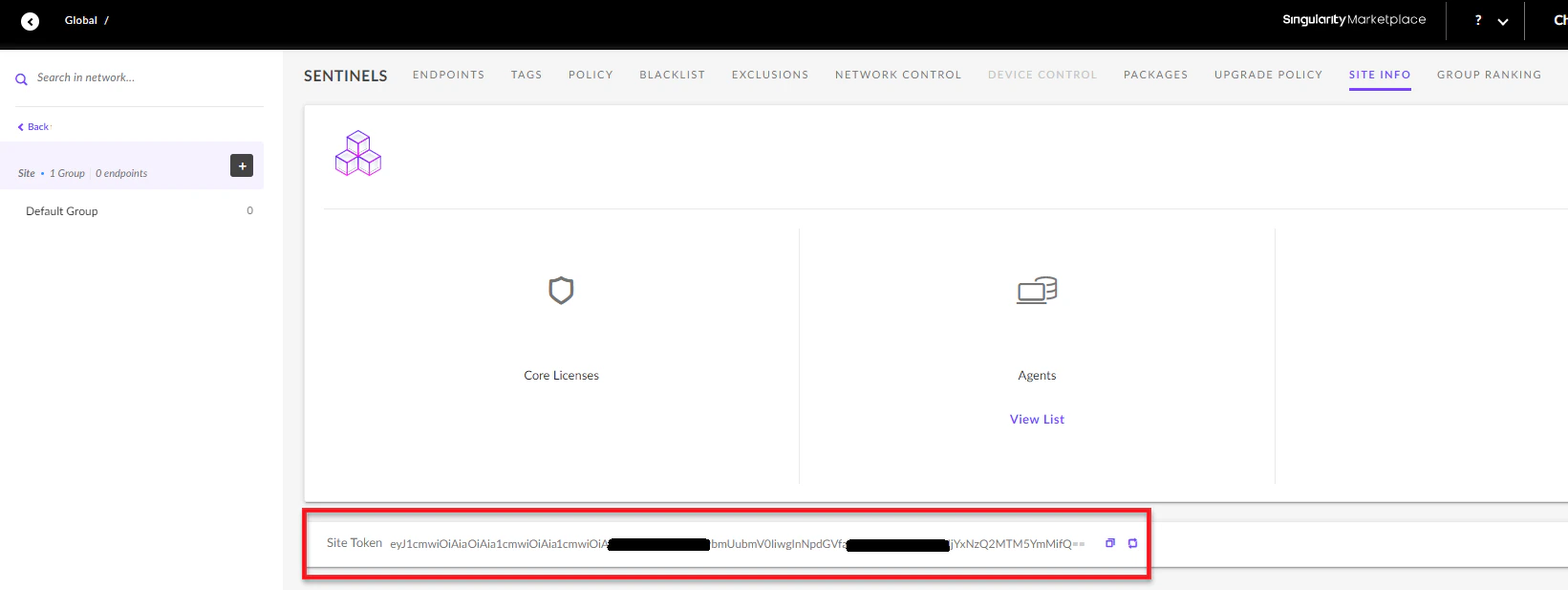
You can retrieve your SentinelOne Site Token from https://<DomainName>.sentinelone.net/dashboard. Navigate to a Site, then to the Site Info tab.
3
Create the installer file.
- Navigate to Settings > Asset > Files.
- Add a file with the following details:
- File: Upload the latest MSI installer
- Variable: S1Installer
4
Write the script.
- Navigate to Scripts.
- Create a script with the following details:
- Name: Install-SentinelOne.
- Content:
#Silently install SentinelOne

if($gorelo:client.s1token){

  $S1Service = get-service -Name 'Sentinel Agent' -ErrorAction SilentlyContinue

  if($S1Service -eq $null){

        msiexec /i $gorelo:file.S1Installer SITE_TOKEN=$gorelo:client.s1token /quiet /norestart

  }
}
5
Deploy the script via a policy.
- Navigate to Policies.
- Edit an existing policy that covers the assets you want SentinelOne installed on.
- Add the Install-SentinelOne script and set to repeat daily at your preferred time.
- Distribute the policy.
1
Create the client custom field.
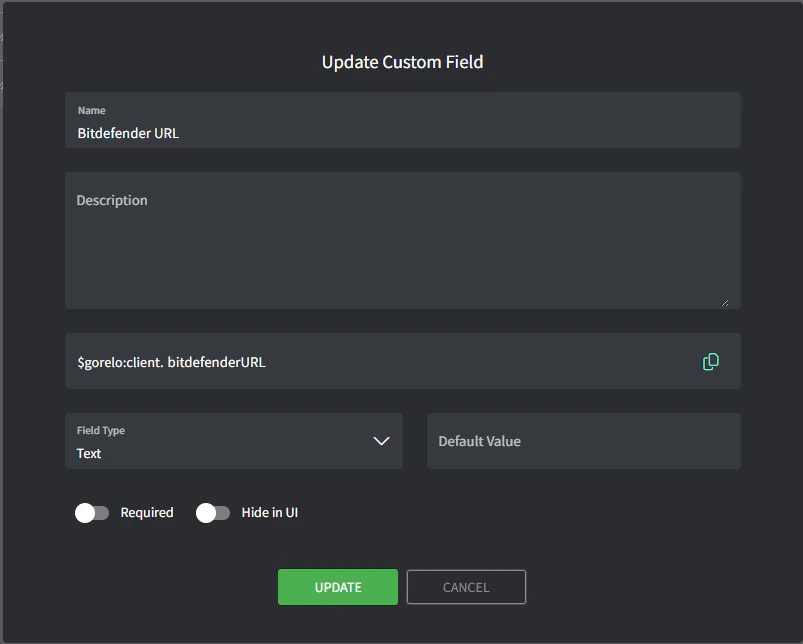
- Navigate to Settings > CRM > Custom Fields.
- Add custom field with the following details:
- Name: Bitdefender URL
- Variable: bitdefenderURL
2
Populate the BitDefender URL for each client.
- Navigate to a specific client.
- Click Custom Fields.
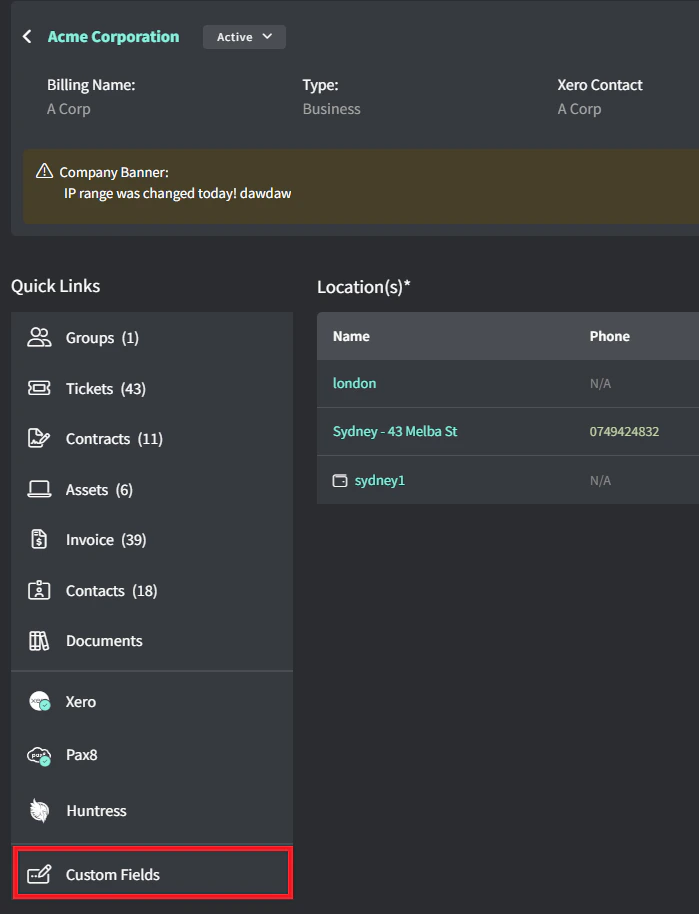
- Edit Bitdefender URL.
- Enter the install exe URL retrieved from Bitdefender for each client.
 Bitdefender URL for the install exe should look like this (fake example):
htttps://cloudgz.gravityzone.bitdefender.com/Packages/BSTWIN/0/setupdownloader_[aHR0cHM6Ly9jbG91ZGdLWDawWVjcy5ncR5em9uZS5iaXRkZWZl3ddwawGfawdmRlci5jb20vUGFja2FnZXMvQlNUV0lOLzAvdkluc3RhbGxlci54bw-bGFuZz1lbi1VUw==].exe
3
Write the script.
- Navigate to Scripts.
- Create a script with the following details:
- Name: Install-Bitdefender
- Content:
#$gorelo:client.bitdefenderURL

# Check if Bitdefender is already installed
if (Get-Service -Name "EPProtectedService" -ErrorAction SilentlyContinue) {
    Write-Host "Bitdefender is already installed. Skipping installation."
    exit 0
}

# Proceed with installation
$url = $gorelo:client.bitdefenderURL
$filename = Split-Path $url -Leaf
$installer = Join-Path $env:TEMP $filename

Write-Host "Downloading Bitdefender installer..."
(New-Object System.Net.WebClient).DownloadFile($url, $installer)

Write-Host "Installing Bitdefender..."
Start-Process -FilePath $installer -ArgumentList "/silent" -Wait
Remove-Item -LiteralPath $installer

# Verify installation
Start-Sleep -Seconds 10  # Give the service time to start
$service = Get-Service -Name "EPProtectedService" -ErrorAction SilentlyContinue

if ($service -and $service.Status -eq "Running") {
    Write-Host "Installation successful! EPProtectedService is running."
    exit 0
} else {
    Write-Host "Installation may have failed. EPProtectedService not found or not running."
    exit 1
}
4
Deploy the script via a policy.
- Navigate to Policies.
- Edit an existing policy that covers the assets you want Bitdefender installed on.
- Add the Install-Bitdefender script and set to repeat daily at your preferred time.
- Distribute the policy.
1
Create the client custom field.
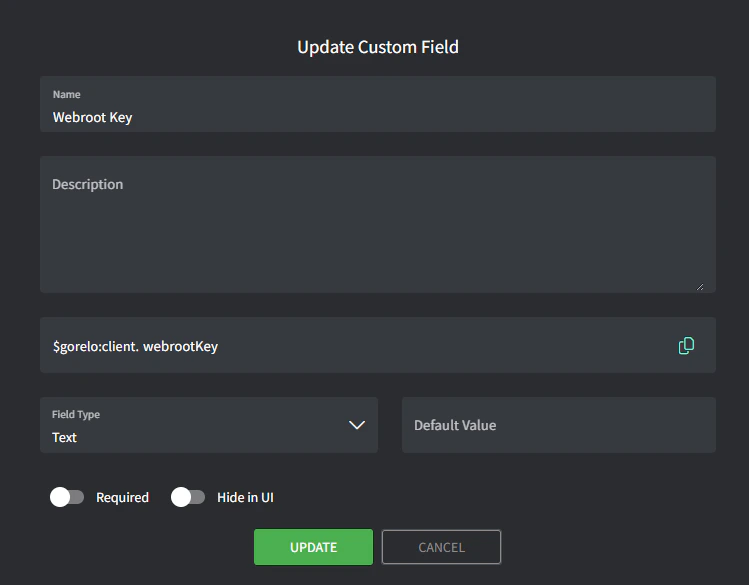
- Navigate to Settings > CRM > Custom Fields.
- Add custom field with the following details:
- Name: Webroot Key
- Variable: webrootKey
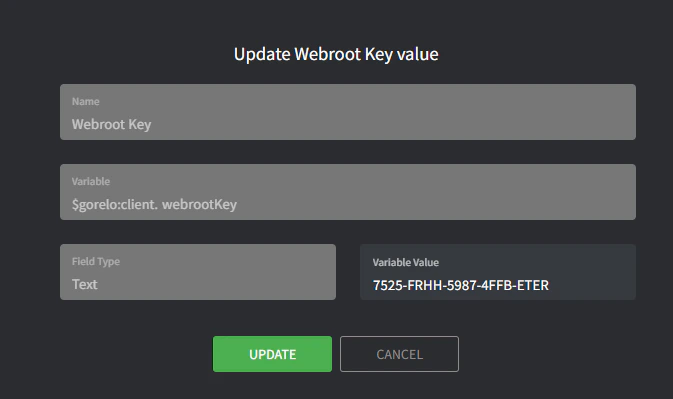
2
Populate the Webroot key for each client.
- Navigate to a specific client.
- Click Custom Fields.
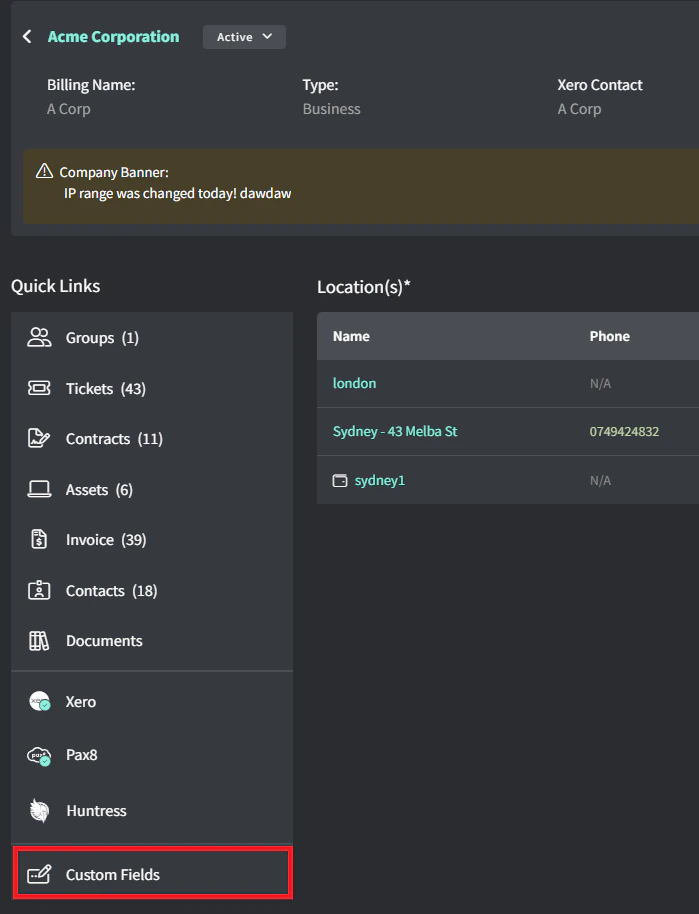
- Edit Webroot Key.
- Enter the Webroot Key retrieved from Webroot.
3
Create the installer file.
- Navigate to Settings > Asset > Files.
- Add a file with the following details:
- File: Upload the latest MSI installer
- Variable: webrootInstaller
4
Create the script.
- Navigate to Scripts.
- Create a script with the following details:
- Name: Install-Webroot
- Content:
# Silently install Webroot
if($gorelo:client.webrootKey){
    $WebrootService = Get-Service -Name 'WRSVC' -ErrorAction SilentlyContinue
    if($WebrootService -eq $null){
        msiexec /i $gorelo:file.webrootInstaller GUILIC=$gorelo:client.webrootKey CMDLINE=SME,quiet /qn /l*v install.log
    }
}
5
Deploy the script via a policy
- Navigate to Policies.
- Edit an existing policy that covers the assets you want Webroot installed on.
- Add the Install-Webroot script and set to repeat daily at your preferred time.
- Distribute the policy.